

Every season, High Point University’s athletes walk into one room and come out with the footage that introduces them for the season. It plays on the video boards, on social and on game day. For the third year running, that room was ours to build.
This year’s first block covered men’s soccer, women’s soccer and volleyball. On day one the room was empty. On day two it was a set, and three teams came through it. The film below is that second day, from the crew’s side of the camera.
What media day is for
Media day produces player intros: a few seconds of every athlete, in character, ready to cut into whatever High Point’s team needs for the season. They edit the final pieces themselves. Our job is the capture.
That shapes everything about the shoot. The footage has to be consistent from the first player to the last, so a defender filmed at nine in the morning matches a setter filmed at four in the afternoon. And every athlete has to come across as themselves, because these clips are what fans see before the whistle.
Day one: building the room
The space we were given was, in Joshua Hieber’s words, “basically just a big content room.” Joshua directs these shoots for us. “We had to assemble a team that could really transform this place into what we knew it could be.”
That transformation takes a full day. The lighting rig goes up, the moving lights get hung and aimed, and the floor goes down: an LED floor that lights the athletes from underneath. Then haze fills the room, so the beams of light read on camera instead of disappearing into the dark.

A build day is not padding in the schedule. It is the reason the shoot day works. Every problem we solve on day one, a cable run or a light that spills onto the wrong wall, is a problem that does not cost a team its time on day two. We go deeper into why that planning matters in what actually happens in pre-production.
The floor that does tricks
Mike, our lighting designer for the weekend, knew which part he was looking forward to. “The most exciting part, I think, is the floor. It does a lot of fun tricks. And I’m really excited to see how what we do in the live setting translates to camera.”
That last line is the craft of it. A room can look spectacular to the eye and flat on camera, because a camera sees brightness and contrast differently from a person standing in the space. The floor, the beams and the haze all have to sit below the athlete, so the player stays the brightest, sharpest thing in frame and the set frames them instead of competing with them.
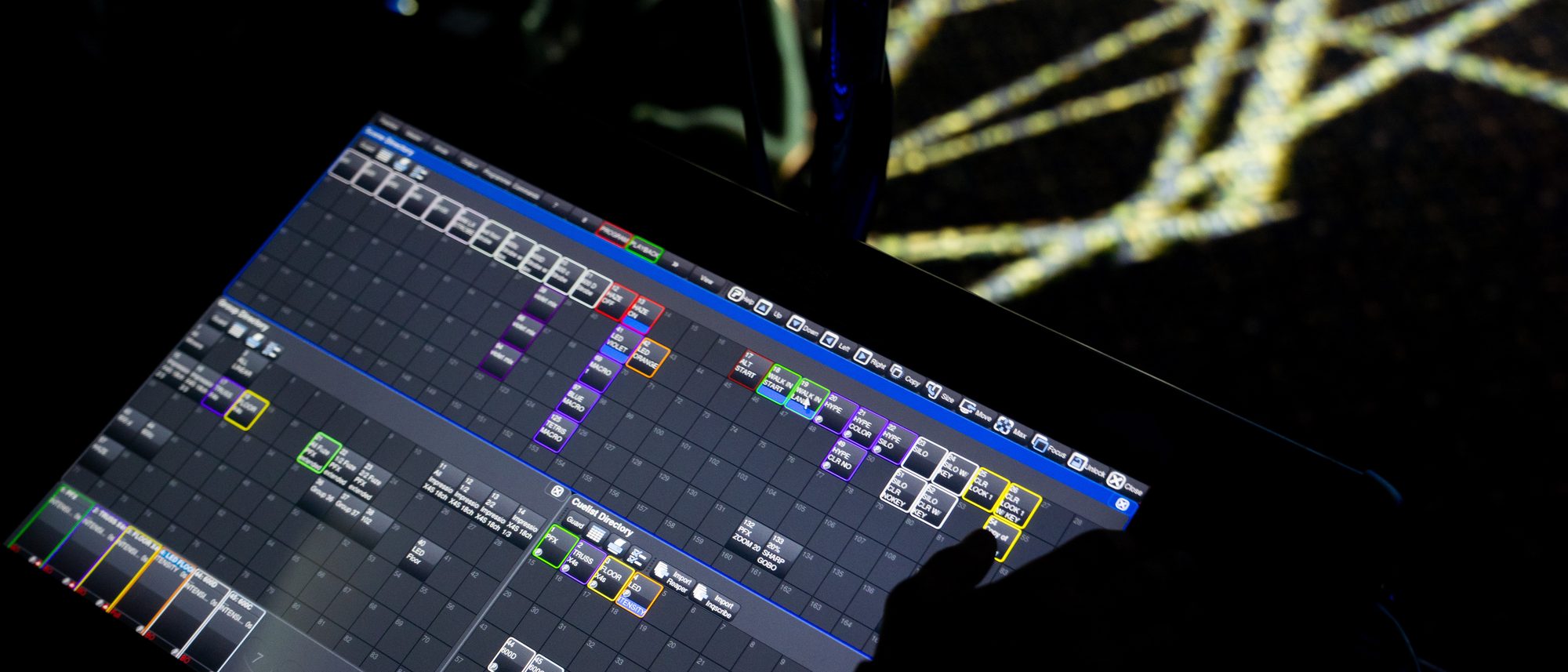
Every look lives in the lighting console. Each team gets its own look within High Point’s purple and white, so soccer and volleyball feel different on the video board, and because the cues are programmed, the twentieth player gets exactly the same light as the first.
Day two: three teams, one set
“Here we are on day two,” Joshua says in the film. “Everything is built. The guys did a great job yesterday putting everything together. Today we have three teams. Lots of work to be done. We’re in a good place.”
Shoot day runs on rhythm. A player steps onto the floor, the camera moves with them on a gimbal, the light cue fires, and the next athlete is already waiting. High Point’s own photographers shoot stills alongside us, so every athlete leaves with video and photos from the same session.
The real job: athletes who look like themselves
None of these players are actors, and most would rather be training. So the brief Joshua sets the crew has nothing to do with lenses.
“The key thing is to keep it fun, keep it light, make them feel comfortable,” Joshua says, so they feel “like they can be themselves on camera. That’s the main objective. The entire shoot.”
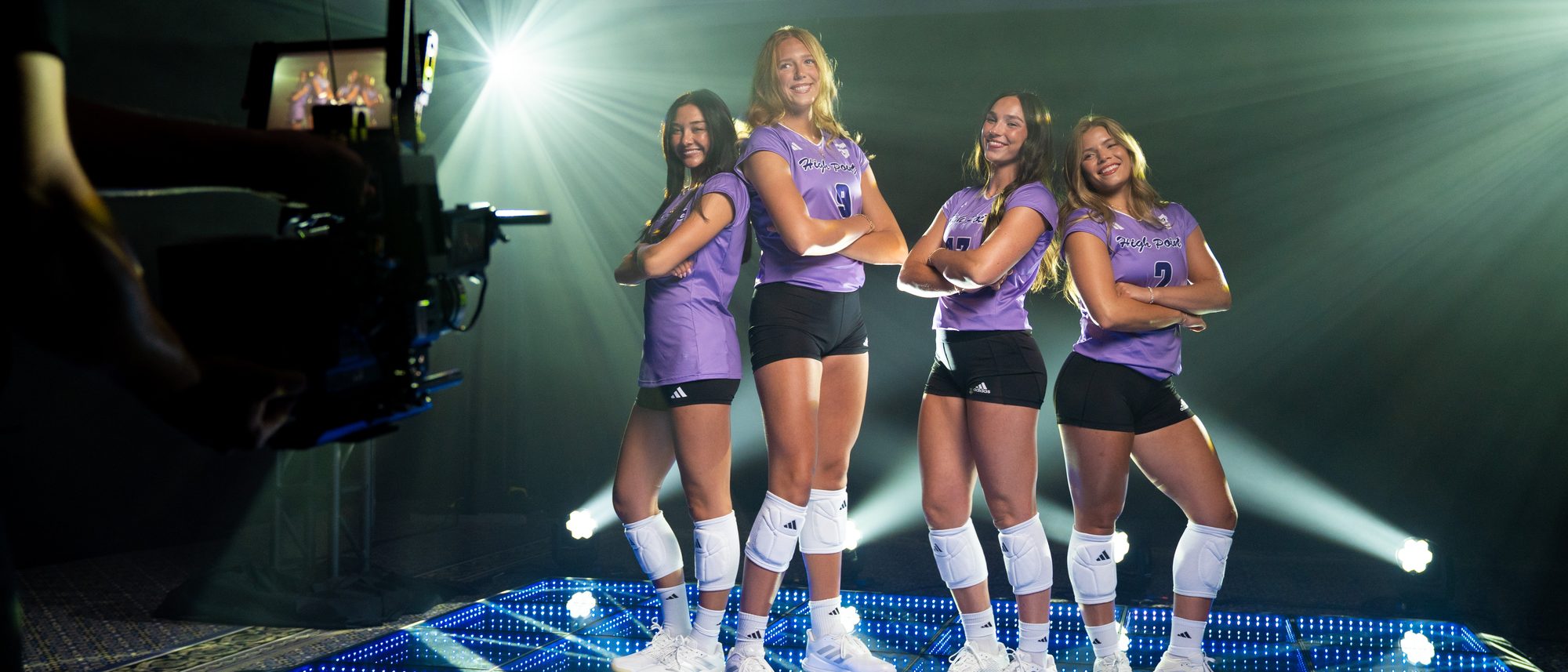
It is the same principle behind every brand film with real people in it. The crew’s energy decides how the person on camera comes across, which is a big part of what a director does on set.
Why High Point keeps coming back
Leah Bwolf of High Point Athletics put it this way in the film: “This is our third year doing media day with them, and I’ve been blown away every single year. I’ve heard from the athletes, they think it’s awesome. The moment they walk in, it gets them excited.”
And on what the partnership is for: “Here at High Point, we’re kind of about quality over quantity. And Digital Spark really helps us get there with our content.”
Mike put the crew’s side of it simply. Digital Spark has “the vision. They know what they want to see,” and brings in “the right people to get that execution.” For him, it “has been an absolute joy to be a part of.”
What any brand can take from a media day
Most marketing teams will never build a glowing floor. The lessons still travel. Build the room for the camera rather than the eye. Program your looks so the hundredth shot matches the first. Give the build its own day, so the people on camera get your best hours. And plan the whole shoot around making those people comfortable. If you have a shoot like that coming up, our motion work starts with exactly that plan.
In summary
- High Point University’s media day produces the player intros that run all season, and 2026 was our third year building it.
- The August block covered men’s soccer, women’s soccer and volleyball, with one day to build the set and one to shoot.
- An LED floor, moving lights and haze turned an empty content room into a stage, with every look programmed so it repeats for each player.
- The crew’s main objective was keeping athletes relaxed enough to be themselves on camera.
- High Point’s verdict, from Leah Bwolf: quality over quantity, and athletes who get excited the moment they walk in.


