

Coofandy came to us with a problem plenty of marketing teams will recognize. The menswear brand had become a lead sponsor of Christopher Bell, the No. 20 Joe Gibbs Racing driver, for the 2026 NASCAR season. It needed campaign content to carry its Spring/Summer, Prime Day and Holiday releases. And it had one production day with him to get all of it.
We shot that day at JGR headquarters in Huntersville, North Carolina, inside a working race shop. Coofandy left with six vertical films, a hero website video, eCommerce, product and lifestyle photography, and behind-the-scenes content. This is how one day became six months of campaign material, and what any brand planning a campaign around an athlete can take from it.
What was the brief?
A campaign that could run from spring through the holidays across paid and organic social, eCommerce, product pages and Coofandy’s own website. Everything for social was shot natively in vertical 9:16 for Instagram Reels, not cropped down from a widescreen edit afterwards.
It also had to be more than sponsorship coverage. Coofandy wanted a campaign that connected its clothing to Christopher’s life as a driver, husband and father. That meant the clothes had to look like his, and the words had to sound like his.
Two constraints shaped everything else. Christopher’s time was fixed. And every concept, script, storyboard and wardrobe look needed sign-off from three organizations: Coofandy’s global marketing team, Christopher’s talent and sponsorship representatives, and the Joe Gibbs Racing marketing team.
Why the real work happened before the shoot
With three approval chains and one day of talent, there is no room to decide anything on set. So every scene and every wardrobe look was storyboarded, approved and mapped to the channel it was for before the day. We go deeper on why that stage decides the outcome in what actually happens in pre-production.
Wardrobe shows how it works. Christopher had agreed to 23 items from Coofandy’s line. From those, our stylist Lile Sizemore built eight looks, adding watches, pocket squares, sunglasses and classic dress shoes where an outfit needed finishing. The lookbook went to JGR with each outfit tied to a specific location, so his team could see every look before he stepped into it. On the creative review call with JGR, Adam put the goal plainly: “Our entire goal here is not to make him feel like he’s wearing something that he wouldn’t wear.”
We also ranked everything. Coofandy told us photography was its bigger priority, because an eCommerce brand needs volume. So we agreed an order for the eight looks and for the video concepts. If something outside our control ate into the day, everyone already knew what would drop first, and nobody had to negotiate it on set.
How do you plan a shoot inside a working race shop?
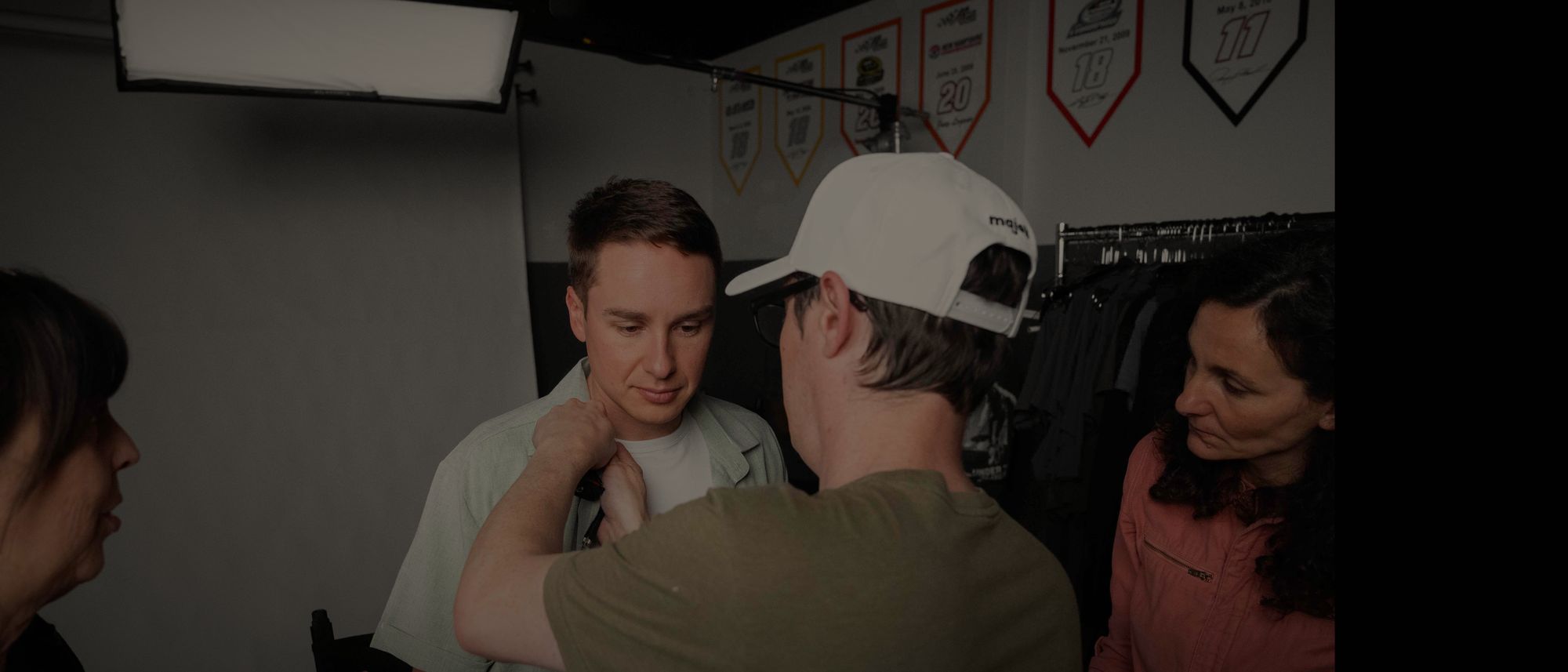
You plan around their day, not yours. JGR is a working facility, and the shoot was a guest in it. In the mornings the pit crews train, so the pit practice area and the gym were only available to us after 1pm. Every location in the plan had to respect that.
The race car was the other moving part. It is not easy to move, and the route from the shop to the studio runs through the team’s retail store. So the car’s moves were scheduled as setups of their own, with time built in to light it properly once it was in place, rather than squeezed in between looks.
Small logistics carried as much weight as the big ones. JGR reserved its cafe area off the lobby as overflow for crew and catering. A storage room at the back of the studio became Christopher’s changing room, because Coofandy’s team had learned on an earlier shoot how much time a long walk to change between looks can cost. Our stylist had every outfit on a rack, steamed and divided by look, before Christopher arrived.

How the day was split
The plan cut the day in two. Crew in at 7:30. Christopher in the chair at 9:00 for three hours of photography. Lunch at noon, then a short reset. Three hours of video from 1:00 to 4:00. Ninety minutes to wrap and get out of the building. The day ran to it.
Photography went first for a practical reason. Video needs bigger lights and more setup, so the video team could build in the studio while Samuel Martin, our principal photographer, worked through the looks around the building. The afternoon video block then lined up with the areas that opened after 1pm.
That is what running motion and stills side by side really means on a day like this. Not two cameras fighting over the same moment, but two teams staggered so neither one waits on the other, sharing the same talent, wardrobe and visual direction. Our stills and motion teams plan together from the first conversation for exactly this reason.
Directing a driver, not a model
Christopher is not a professional model, and nobody pretended otherwise. Every outfit came with a visual reference, so he could see what we were after before he stepped into frame. The “Dress the Journey” concept, directed by Max Renfro, moved him through the JGR studio, the garage and a staged race car, from his fire suit into Coofandy’s menswear and back.
The interviews stayed on ground he knows: racing, family, milestones and lessons from his father. Watching his post-race interviews, our team had noticed how articulate and energetic he is when racing is the subject. So the questions were built around his life, not the product.
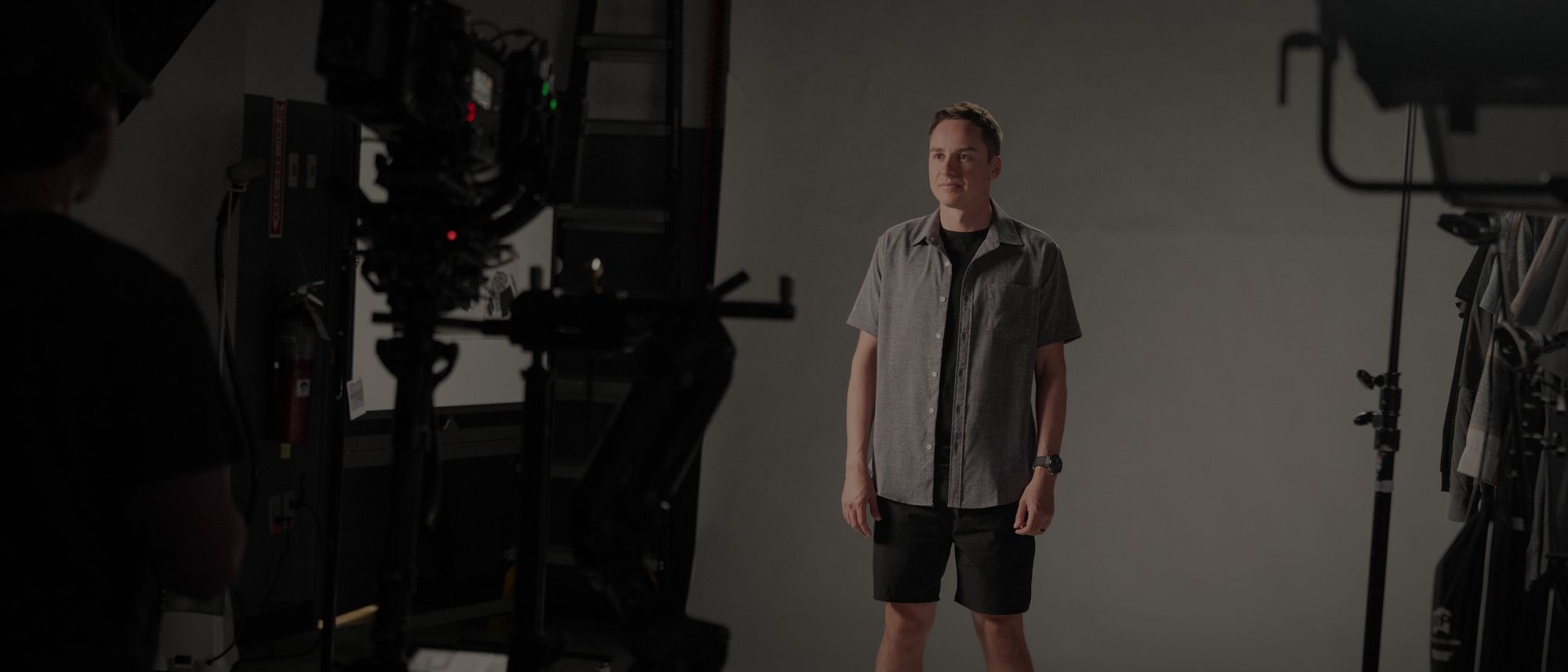
We interviewed him in several of the looks, so the films could cut between the conversation and the clothing rather than leaving the menswear for the b-roll. The schedule was tight. Our time with Christopher was set by contract, so every block had to land, and it did: Coofandy left with everything it needed from the day, with his personality coming through and the clothing at the center of the story.
What came out of one day
The turnaround was measured in days, not weeks, to hit Coofandy’s spring drop calendar. That only works if feedback moves as fast as the edit, so the post schedule set 24-hour approval windows from the start.
The six vertical films cover the brand’s 11th anniversary, two Prime Day pushes and the holiday drop, plus two concept pieces, Dress the Journey and Date Night. You can watch all six on the Coofandy x Christopher Bell project page. The stills side delivered 18 to 24 final product images across the looks, plus lifestyle banner photography pairing Christopher with his car, which you can see on the photography project page.
More than a list of deliverables, it is one visual system. Every release from Spring/Summer through Holiday 2026 runs in the same creative direction, because all of it came from the same day.
What to take into your own athlete campaign
Most brands working with an athlete, a coach or a partner organization face the same shape of problem: a short window, several parties with a say, and a calendar of releases to fill. The lessons travel. List every asset and channel first, then build the creative around the time you have. Get every approval before the day, not during it. Rank your looks and concepts so the cuts are agreed in advance. And plan the shoot around the host’s working day and the talent’s comfort, because both decide what you get on camera.
If you are planning a talent or partnership campaign in the Carolinas, our guide to video production in North Carolina covers how we work across the state.
In summary
- Coofandy needed a season of campaign content built around Christopher Bell and had one production day with him at Joe Gibbs Racing in Huntersville.
- Every scene and wardrobe look was storyboarded and approved by Coofandy, Christopher’s representatives and JGR before the shoot, with a ranked order of looks and concepts.
- The plan worked around a live race shop: pit areas open after 1pm, a race car routed through the retail store, and a changing room inside the studio.
- Three hours of photography in the morning let the video team build for three hours of video in the afternoon.
- The result was six vertical films, a hero website video and a full photography set, all in one visual direction from Spring/Summer through Holiday 2026.


