

Every commercial we make comes with cutdowns. The 30-second hero spot gets the attention in the room. The 15-second versions usually get treated as the leftovers, trimmed down at the end of the edit because the media plan needs them.
Home Outlet just sent us the numbers on “Even the Mob Needs a Kitchen,” the mob-comedy campaign we made for them this year, and the leftovers won. Across more than 14 million paid video impressions, the :15 out-converted the :30 on both CTV and online video. This post walks through what the data showed, where the :30 still earned its place, and what it changes about how we plan a shoot.
What did Home Outlet’s numbers show?
The :15 was the most consistent performer in the campaign. That is Home Outlet’s own read of its results through September 30, 2026, and the paid video numbers back it up.
On CTV, the :15 ran 3.76 million impressions and drove 103,411 conversions, as Home Outlet’s ad platforms count them, at a 2.75% conversion rate. The :30 ran 3.50 million impressions for 80,517 conversions at 2.30%. That is 28% more conversions from the shorter spot, at a rate almost half a point higher, on a similar number of impressions.
Online video showed the same thing more sharply. The :15 delivered 66,702 conversions from 2.90 million impressions. The :30 delivered 57,030 from 3.86 million. So the :15 produced 17% more conversions on 25% fewer impressions, with a stronger conversion rate and a stronger completion rate.
Those are Home Outlet’s figures, shared with their permission. We did not run the media. We made the films, and this is the first time we have seen a client split the results cleanly enough to compare the two runtimes side by side.
Why did the shorter spot convert better?
Not because people stopped watching the long one. On CTV, completion for both versions was essentially tied, above 98%. People watched the :30 all the way through. They just did less afterwards.
Our read is that the :15 is a cleaner ask. The :30 has room for the whole setup: the crew walks in, the shakedown that never happens, the associate who beats their price without blinking. It is a better story. The :15 gets to the price faster and leaves the viewer with one thing to remember. For a retailer whose two hardest-working facts are a price-match guarantee and 100% employee ownership, one thing to remember turns out to be enough.
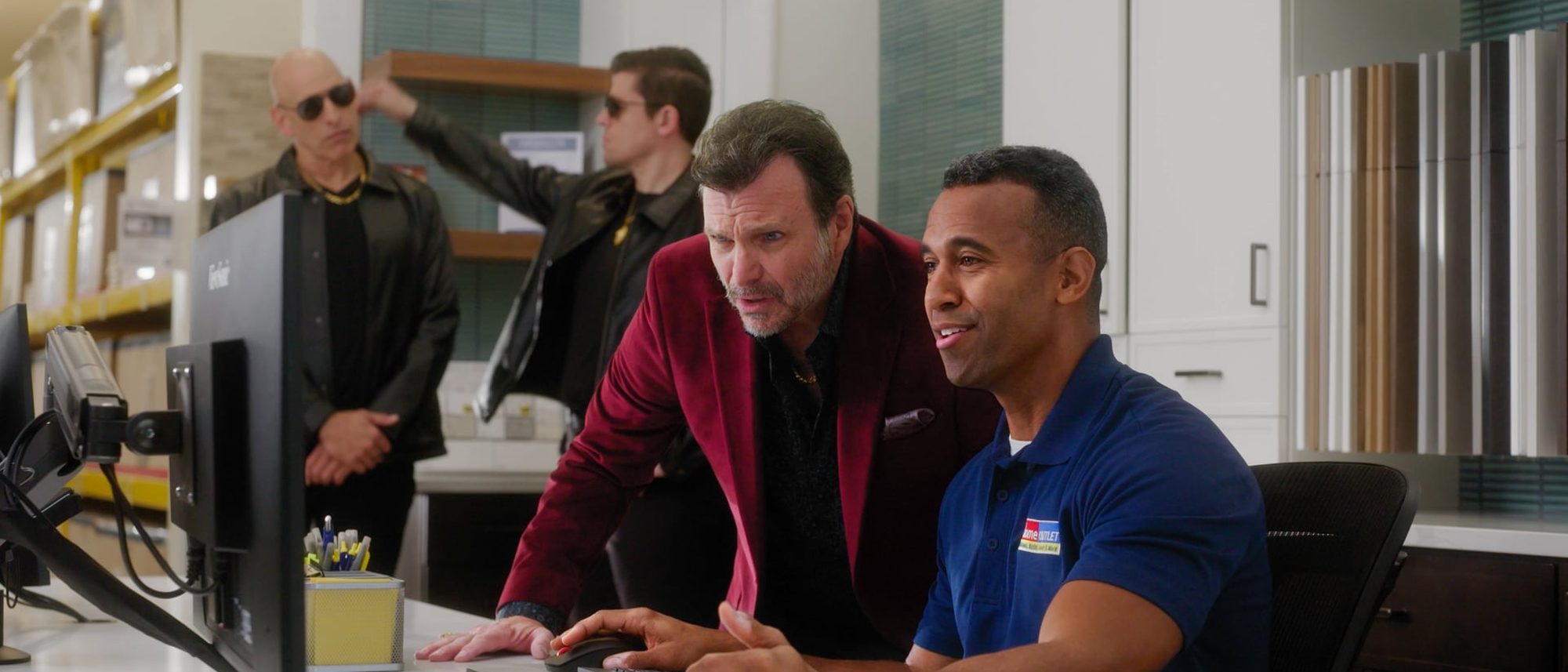
There is a craft point in here too. A cutdown only works if it was written to stand on its own. We built the story across three real store departments, kitchen, bathroom and flooring, and each department is a complete beat with its own joke and its own payoff. When the :15s were cut, they were not a trimmed version of a longer idea. They were the idea.
Where the :30 still earns its place
It would be easy to read this as “make shorter ads” and stop there. The numbers say something more useful than that.
The :30 kept the higher click-through rate in online video. Home Outlet’s own takeaway is that the :30 is the version for storytelling, for click-oriented placements and for controlled tests. That fits. If the goal is to get someone to stop and click, the extra fifteen seconds of character buys attention. If the goal is a conversion, the shorter ask did more.
The results were not uniform everywhere, either. In the Memphis and Olive Branch market, CTV was mixed: the :15 drove more conversions, but the :30 had the higher conversion rate. And several flights ran the :30 on its own, so they say nothing about runtime at all. Data like this is a direction, not a law, and it is strongest where the two versions ran in the same market at the same time.
Different departments won different platforms
The second finding was one we did not expect. Each department spot found its own audience, depending on where it ran.
Paid social reached 13.38 million people across Meta, Pinterest and Reddit. On Meta the bathroom spot led. On Pinterest and Reddit the kitchen spot led. On YouTube, where the three spots earned 903,990 views, flooring pulled the most views at 371,148, with bathroom close behind at 352,785. Kitchen had fewer views but the strongest thumbnail click-through rate, at 7.8%.

None of that was planned as a platform strategy. It came from a creative decision made much earlier: shoot three departments instead of one. That gave Home Outlet’s team three versions of the same idea to place wherever each one did best. A single hero spot with generic cutdowns would not have given them that choice.
What this changes about how we plan a shoot
The cutdowns get planned in pre-production now, not discovered in the edit. Each :15 gets its own beat in the script, its own coverage on the day and its own approval, the same as the hero. We go through why that planning matters in what actually happens in pre-production.
It also changes how we talk about deliverables with clients. A :30 plus three department :15s from one shoot is not four times the cost of one spot, because the shoot days are shared. It is the most efficient thing a production budget can buy, which we explain in our breakdown of business video services and what they cost.
And it makes a case for testing properly. Home Outlet could compare the two runtimes because both ran in the same markets at the same time. Where that did not happen, the flights tell you nothing about length. If you want to learn from your cutdowns, ask your media team to run them head to head.
What Home Outlet said
Home Outlet is 100% employee owned and operates 114 stores across 22 states. Danial Reed, their VP of Marketing, summed up the year like this: “Not only did reach and engagement exceed expectations, but the different versions also proved to positively impact conversion performance as well.”
The different versions are the point. Home Outlet has brought us back for its next campaign, and the cutdowns are being planned from the first draft of the script. If you are planning a campaign of your own, our motion work starts the same way.
In summary
- Across more than 14 million paid video impressions, Home Outlet’s :15 cutdowns out-converted the :30 hero spot on both CTV and online video.
- On CTV the :15 drove 28% more conversions at a higher rate, and online it drove 17% more on 25% fewer impressions.
- Completion was tied above 98%, so the :15 won on the clarity of the ask, not on attention.
- The :30 kept the higher click-through rate and is still the version for storytelling and click-led placements.
- Shooting three departments gave Home Outlet a version that led on each platform, which is why cutdowns now get planned in pre-production.


