

If you run marketing for a company in North Carolina and need video made, you will find plenty of production companies in NC. Most of them are crews: they will film whatever you point them at. A smaller number will help you work out what to make in the first place, plan it, run the approvals and deliver everything your campaign needs. This guide is about finding the second kind.
We are a creative production house in Charlotte. We have made motion, stills and animation since 2014, and a lot of that work has been made in this state, from a racing headquarters in Huntersville to a university athletics department in High Point. Below is how video production in North Carolina actually works, what it costs, and the questions worth asking before you hire anyone.
What does video production in North Carolina look like?
Most corporate video production in North Carolina happens around three metro areas: Charlotte, the Triad of Greensboro, Winston-Salem and High Point, and the Triangle of Raleigh, Durham and Chapel Hill. The headquarters, plants, campuses and stadiums a marketing team wants on camera mostly sit within reach of one of them.
That matters less than people expect when choosing a partner. A brand film, a product launch or a campaign is not limited by where the production company keeps its office. It is limited by whether the team can develop the idea, plan the shoot and manage the approvals. The camera travels.
What geography does change is cost and logistics. A shoot an hour from your production partner is a day trip. A shoot four hours away usually means hotels, meals and a travel day either side. We produce across the state and travel for the work, including to the Triangle, and we tell you upfront what any travel adds so it never turns up as a surprise on an invoice.
The rest of this guide takes the decisions in the order a marketing team usually meets them: who to hire, what it costs, where to shoot, who crews it, and what kind of work fits your industry.
How do you choose a production company in North Carolina?
Start with what you need beyond the shoot. If your team already has the idea, the script and the approvals handled, a capable crew may be enough. If you need someone to develop the concept, plan the production and manage stakeholders, you need a production partner, and that is a much shorter list.
Then ask four questions of anyone on that list:
- Can they show you finished work at your scale, with the brief behind it, not just a reel?
- Can they handle motion, stills and animation, or will you hire three vendors and manage the handoffs yourself?
- How do they run approvals when more than one organization has to sign off?
- Will they talk about budget on the first call, so you both know what the money buys?
A good partner answers all four plainly. If the answers are vague, the production will be too.
It is also worth meeting the people who will actually run your project. On a shoot day, the director and producer decide most of what you end up with. We explain who does what in what a director and producer do on a video production.
What does video production in North Carolina cost?
Most of our live-action motion projects land between $50,000 and $125,000. Larger campaigns with more creative development, several shoot days, multiple locations, talent and a broad set of deliverables can go past $250,000. Not every project needs that structure, and leaner scopes exist for focused or ongoing work.
Inside that range, the number of shoot days moves the budget more than anything else. Location adds to it in predictable ways: travel time, overnight stays and moving gear. Shooting close to your production partner, or in their studio, removes most of those lines.
The budgets that go wrong are usually the ones decided late. Talent usage is the one people underestimate most, because putting someone’s face in paid media for years costs far more than putting it there for months. We break that down in talent buyouts explained.
The best thing you can bring to a first call is a number, even a rough ceiling. How to set a video budget before you have a concept walks through how to get there, and business video services and what they cost sets out what each type of project typically includes.
Do you need a permit to film in North Carolina?
Sometimes. It depends on where you are shooting and what you are doing there. Filming on your own premises or on private property with the owner’s written permission is usually straightforward. Filming on public streets, in parks or on other public property can need permission from the city or the agency that controls it, and the rules differ from place to place.
So the answer for any given shoot comes from the location, not from a general rule. A good production partner checks this during pre-production, alongside insurance, location agreements and releases for anyone who appears on camera. None of that should be the marketing team’s job to chase. We cover where it sits in the schedule in what actually happens in pre-production.
North Carolina also has a film grant, run by the North Carolina Film Office. Whether a particular project qualifies is set by the Film Office’s own rules, so check with them directly rather than assuming it applies to a commercial or brand piece.
On locations themselves, the state gives you a lot within a day’s reach of Charlotte: city streets, lakes, industrial sites and campuses. Choosing locations close together is one of the simplest ways to keep shoot days, and the budget, under control.
Should you shoot in a studio or on location?
It depends on what the video has to show. If the story is your plant, your people at work or your campus, shoot on location. If the story is a product, an interview or a controlled look you need to repeat, a studio is usually faster and cheaper.
We run our own studio in Charlotte. It is 2,500 square feet, with a white cyc and a 15-foot lighting grid, a client lounge where your team can watch the monitors without crowding the set, and a ground-level bay door for loading gear, props and set builds. Because it is ours, the set can be prepared before your call time and the day starts shooting.
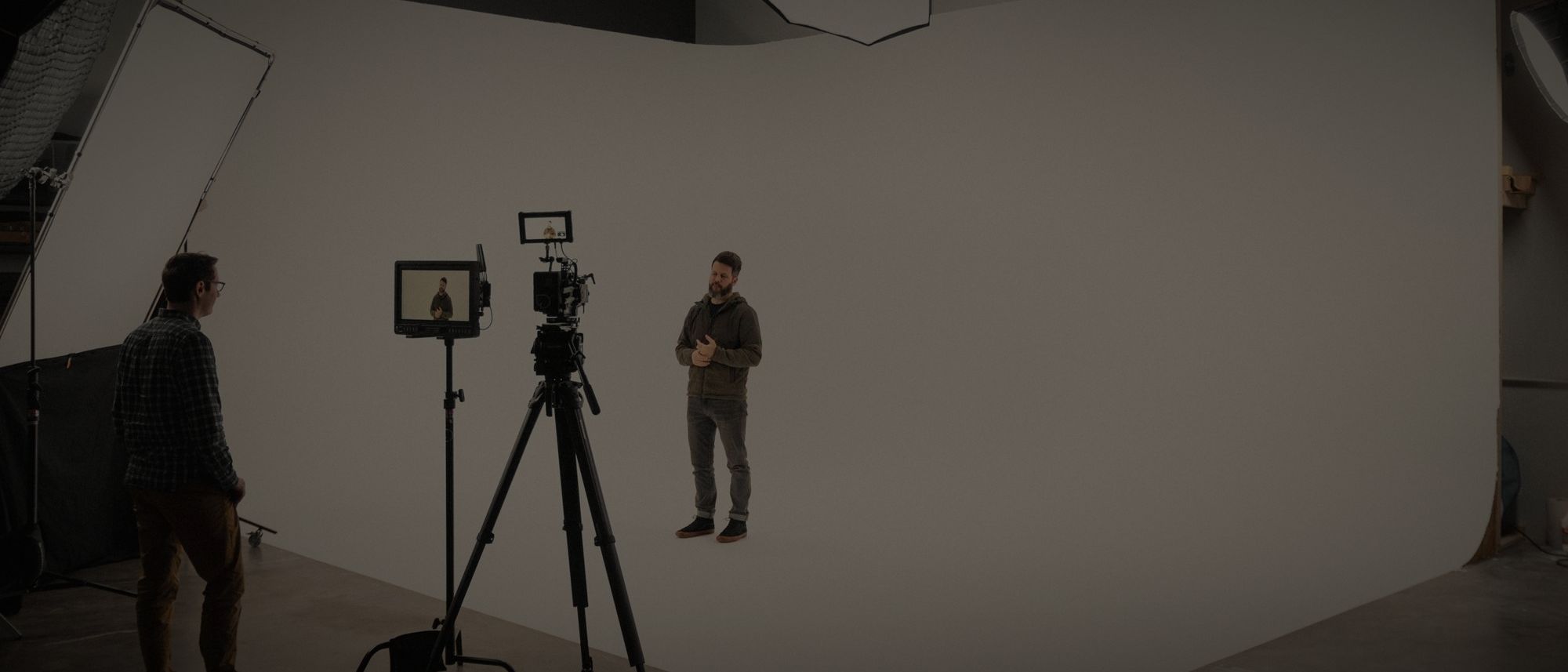
Plenty of projects use both. A common shape is a day or two on location for the story, then a studio day for interviews, product shots and stills. The details of the room are on the studio page.
Location work has its own discipline. When you cannot control the room, the planning has to do the controlling, and live events are the extreme version of that. We wrote about shooting a live match day in covering a live event you cannot direct.
Should you hire a local crew or fly a team in?
For most North Carolina projects, a crew based in the state is the cheaper and simpler choice. Every person who flies in brings a flight, a hotel, meals and travel time, and every piece of gear that flies in has to be shipped or rented locally anyway.
A Charlotte-based team covers the Charlotte region as a day trip and reaches the Triad and the Triangle with a short drive. Our core team is here, and we build each crew around the project from people we know: directors, photographers, stylists, hair and makeup, and specialist operators.
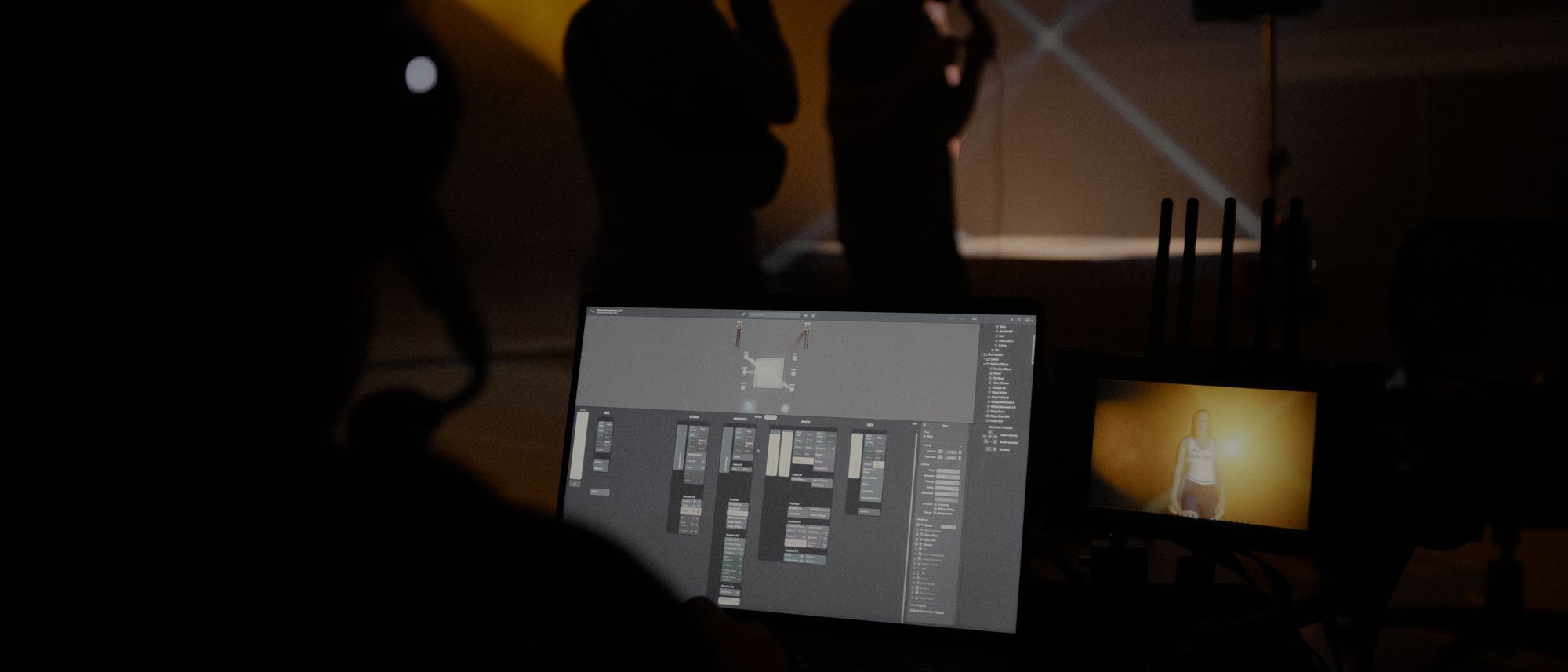
Flying a team in still makes sense when you need a specific director or specialist who only works elsewhere, or when the work spans several states and one consistent team matters more than the travel cost. Even then, a local production partner can run the shoot and fill the rest of the crew here. Our film for Chesapeake Containment Systems, a Statesville company, was shot on working sites across several states with a package kept light enough to move between them. That one is on the Chesapeake brand story project page.
Which industries do production companies in NC work with?
Most of the state’s economy, and the work follows it. Here is what that looks like in the sectors we work in most.
Manufacturing and industrial. North Carolina makes a great deal, and most of it is hard to film well. Plant shoots involve safety rules, working lines that cannot stop, and products that look the same from the outside. The common mistakes are covered in what manufacturers get wrong about brand video.
Financial services. Charlotte is one of the country’s largest banking centers. Financial work brings more review rounds, more legal input and stricter rules on who and what can appear on camera. Building those approval rounds into the schedule from day one is what keeps it on time.
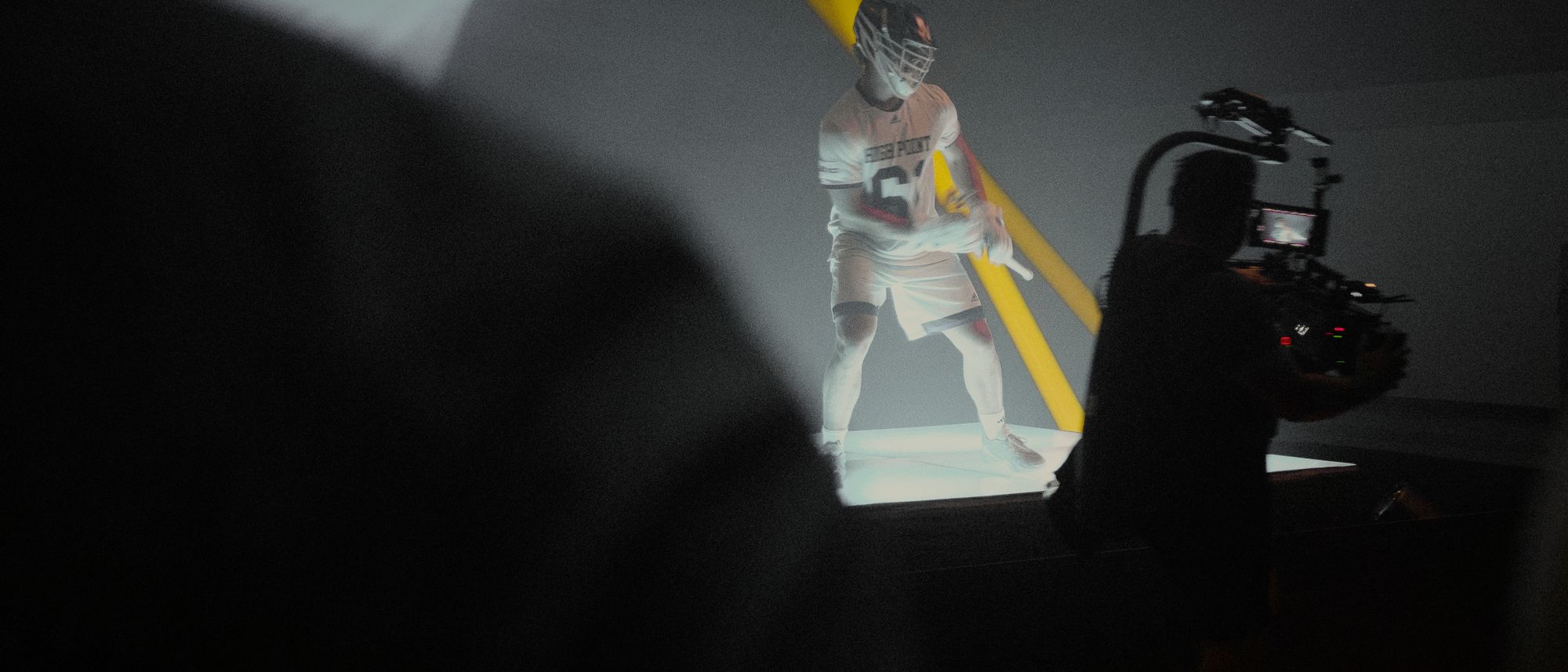
Higher education and athletics. For three years we have built the media day set for High Point University Athletics: one day to turn an empty room into a lit stage, one day to film the player intros that run all season. Universities need work that feels like their students, and athletics departments need it fast.
Retail and consumer brands. For Coofandy we produced a campaign with NASCAR driver Christopher Bell in a single day at Joe Gibbs Racing in Huntersville, on the Coofandy x Christopher Bell page. For Walmart and Major League Soccer, working with FootballCo, we shot a three-part social series around Charlotte FC, on the Walmart x MLS page.
Can one team handle motion, stills and animation?
Yes, and it usually costs less than hiring three. When the same team plans the motion, the stills and the animation, the work looks like one campaign and the shoot days do double duty. Photography captured on the same set as the video costs far less than a second shoot booked later.
Animation matters most when the subject cannot be filmed. For InVue, a Charlotte company, we made the 3D animated launch film for OnePOD Max, which has passed 1.3 million views. That is on the OnePOD Max project page. For Lowe’s, headquartered in Mooresville, we produced a six-film animated series explaining the MVP Pro Rewards program to contractors, one benefit per film. That is on the Lowe’s animation series page.
If you are deciding between filming something and animating it, live action vs animation sets out the trade-offs.
Do agencies use North Carolina production companies?
Often. Brand agencies, PR firms and independent agencies without a production arm regularly bring in a production partner to make the work they have sold. Roughly one in five of our wins has come to us through an agency.
What an agency needs is different from what a brand needs. It needs a partner who will follow its creative rather than rewrite it, and keep its client relationship intact. It also needs someone who can take on the whole production, from crew and locations to post, so the agency team can stay on strategy and the client.
Some agencies only need the room. Our Charlotte studio is rented by agencies, production companies, photographers and independent crews who bring their own team, with gear and crew available if they need them.
What else do buyers ask about video production in North Carolina?
Do you only work in Charlotte? No. We are based in Charlotte and produce across North Carolina and beyond, traveling for the work.
How much does a corporate video cost in North Carolina? Most of our live-action motion projects land between $50,000 and $125,000. Larger campaigns can pass $250,000, and leaner scopes exist for focused or ongoing work.
Do we need our own script and concept? No. We develop concepts and scripts as part of the work, or produce yours if you already have one.
Can we have video and photography from the same shoot? Yes. Shooting both on the same day is one of the most efficient things a production budget can do.
Can we watch the shoot? Yes. In our studio the client lounge lets your team follow the monitors, and on location we set up a viewing area so decisions get made on the day.
What should we have ready for a first call? What the video has to do, who will watch it, roughly when you need it, and a budget range. With those four, we can tell you on the first call what the project takes.
In summary
- Most corporate video in North Carolina is made around Charlotte, the Triad and the Triangle, and a good production partner covers all three.
- Choose a partner who can develop the idea, handle motion, stills and animation, run approvals and talk budget on the first call.
- Most of our live-action motion projects land between $50,000 and $125,000, and shoot days and travel move that number more than anything else.
- Permits depend on the location, a studio suits controlled work, and a crew based in the state keeps travel costs down.
- Our North Carolina work runs from High Point media days and a Joe Gibbs Racing campaign to animation for Lowe’s and InVue.


